
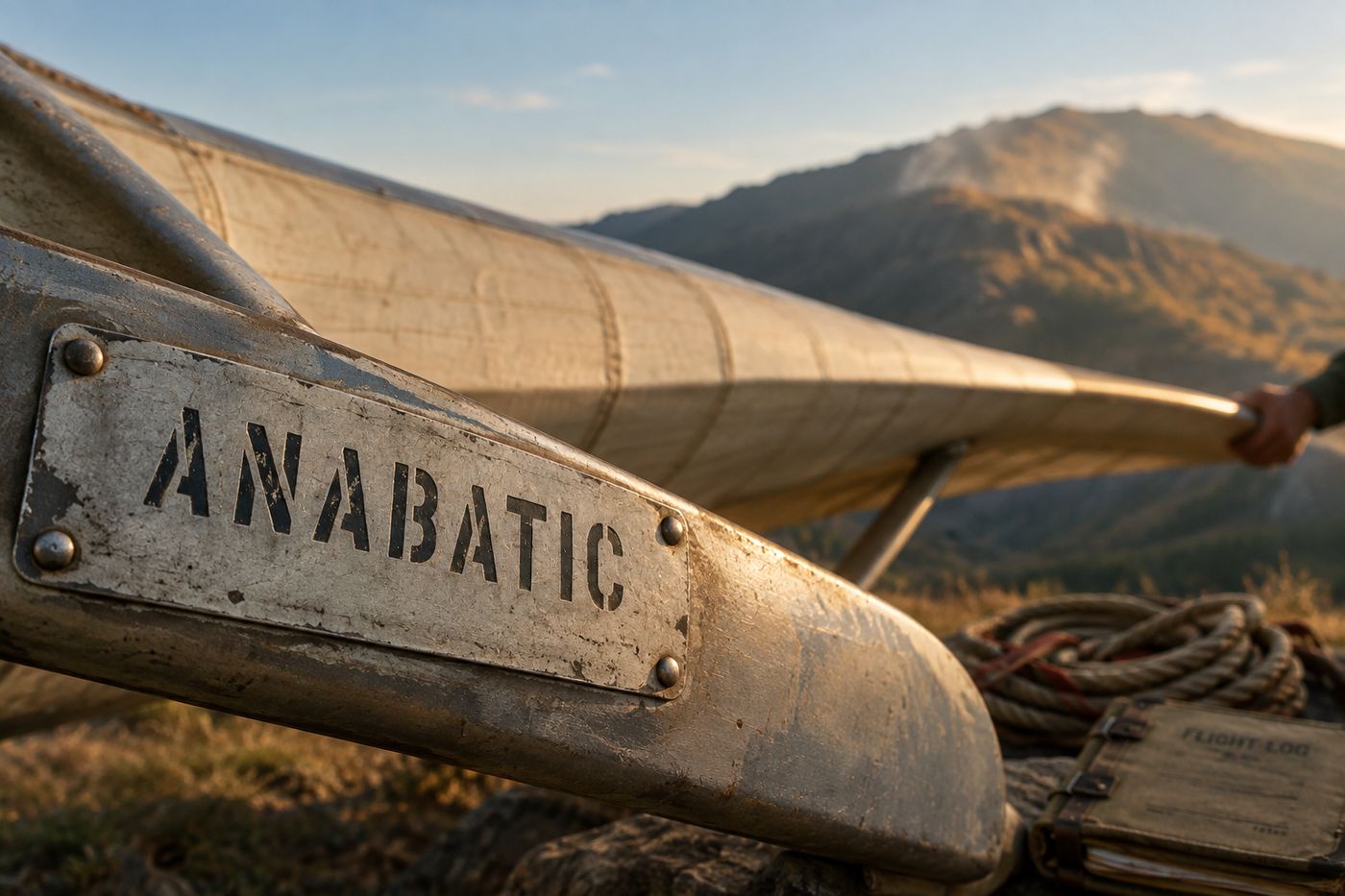
1 What It Means
Describing a wind that flows upward along a slope after the sun heats the ground and warms the air resting against it.
2 Caught in the Wild
Anabatic winds develop on mountain slopes exposed to strong solar heating and are strongest in early to mid afternoon.
American Meteorological Society, Glossary of Meteorology · Undated
3 Where It Comes From
The word comes from the Greek anabatikos, meaning fit for mounting or climbing, itself from anabainein, to go up. British meteorologists borrowed it in the late 1800s when the field was formalizing its vocabulary and needed a precise counterpart to katabatic, the downslope wind. It never crossed into general English because ordinary speech already had good enough words: updraft, breeze, gust. Nobody outside a weather station or a mountain airfield needs to distinguish a slope wind driven by solar heating from any other kind of rising air, so the term stayed exactly where it was coined, inside the discipline that actually has to measure the difference.
4 The World Behind the Word
Mountain air behaves on a clock. Through the morning, sun strikes a slope directly while the valley floor stays shaded, so the air touching the hillside warms faster than the air over open ground at the same elevation. Warm air is lighter, so it rises, pulled up the incline as if the mountain itself were exhaling. That's an anabatic wind, and it typically peaks in early afternoon, then reverses after sunset into a katabatic, or downslope, flow as the ground cools faster than the air above it. Glider and paraglider pilots plan entire flights around this daily cycle, riding the anabatic lift to gain altitude along a sunlit ridge. Forecasters covering mountain regions need the term because a plain word like 'wind' says nothing about direction, cause, or timing, all of which matter enormously when you're deciding whether to fly.
5 Use It Yourself
This one mostly stays in its lane, but it's a sharp word to drop on a hiking trip when you notice the breeze reverse direction as the sun climbs, or when a pilot friend explains why afternoons are better for soaring than mornings. It reads as informed rather than showy, since almost nobody outside meteorology or aviation will recognize it, so it won't land as pretension. Save it for people who'll actually appreciate the precision.
Try it out loud
We waited until noon to launch, once the slope was warm enough to kick up a good anabatic breeze.
🗝️The Deep Cut File
The word's better-known cousin, katabatic, describes the opposite phenomenon: cold, dense air sliding downhill after sunset, and it has quietly slipped into general vocabulary through news coverage of Antarctica, where katabatic winds off the ice sheet can exceed 100 miles per hour. Anabatic never got that kind of press moment. There's no viral disaster story about air rising gently up a warm hillside, so the word that names the sunnier half of the same daily cycle stayed obscure while its stormier twin found an audience.