Word of the Day

More to Learn

Prattle

Prattle

Read more
Haltere

Haltere

Read more
Eccentric

Eccentric

Read more
See All Content
logo
  • Previous Words
  • Games▾
    • Celebrity Word Search
    • Word Flower
    • Word Guess
    • Stacker! Game
  • Sign Up
  • Previous Words
  • Games▾
    • Celebrity Word Search
    • Word Flower
    • Word Guess
    • Stacker! Game
  • Sign Up

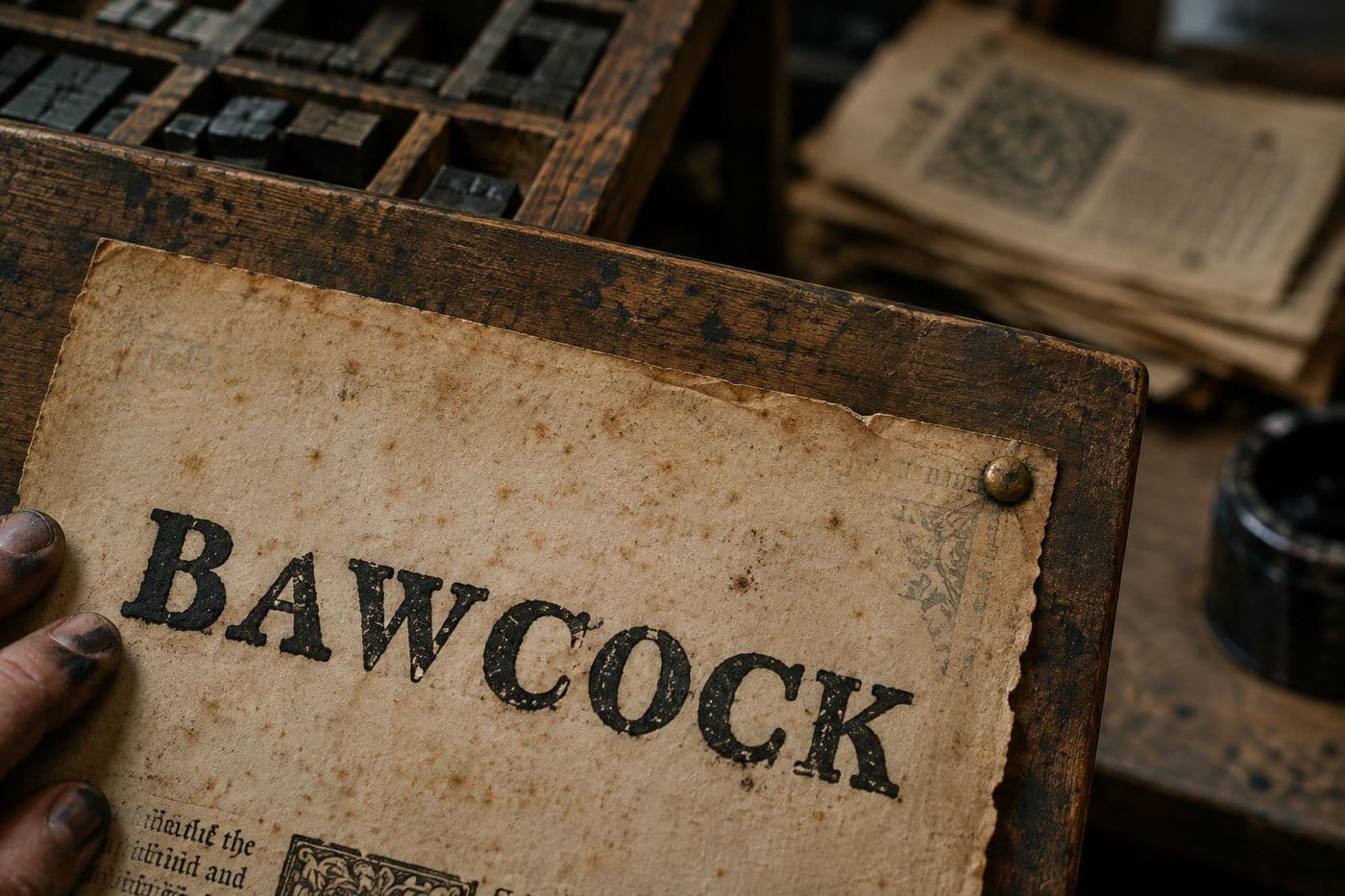
Bawcock

B

Dictionary Deep Cut

Bawcock

BAW-kok

🔊 Hear it spokenNoun📁 Early Modern English

A word tavern-goers once used to flatter each other, before it turned into an insult and vanished.

1 What It Means

A term of affectionate address for a man, roughly meaning fine fellow or good man, used mainly in playful or joking speech.

FieldEarly Modern English
First recordedc. 1570s
StatusObsolete by c. 1800, archaic curiosity
Where you'd hear itNowhere outside Shakespeare footnotes and dialect dictionaries

2 Caught in the Wild

"The king's a bawcock, and a heart-of-gold, a lad of life, an imp of fame."

Shakespeare, Henry V, Act 4, Scene 1 (Pistol)  ·  c. 1599

3 Where It Comes From

Bawcock likely comes from the French beau coq, literally handsome cock or fine rooster, the kind of barnyard swagger word that got borrowed into English tavern talk. It shows up in Shakespeare as warm, joshing praise, the sort of thing you'd call a soldier you liked. But by the 1700s the word had drifted toward mockery, used to needle a man who thought too much of himself. Once a word turns sarcastic, it usually doesn't survive long as sincere praise, and general English simply moved on to plainer compliments. Nobody guarded bawcock the way a trade guards its jargon. It just fell out of fashion and stayed out.

4 The World Behind the Word

Early Modern English ran on a huge stock of terms of address that don't map cleanly onto anything we use now. English speakers of the 1500s and 1600s had dozens of ways to hail a man depending on affection, rank, and how drunk everyone was: bawcock, gossip, chuck, mate, cully. These words did real social work in a culture obsessed with hierarchy and courtesy, where how you addressed someone signaled exactly where you stood with them. Playwrights like Shakespeare mined this vocabulary constantly because a single term of address could tell an audience volumes about a character's class and temperament in one syllable. Most of these words had short shelf lives. Standardized English, dictionaries, and print culture gradually flattened this riot of address terms into a handful of survivors: sir, mate, buddy, pal. Bawcock lost that race entirely.

5 Use It Yourself

Deploy this in a group chat when someone pulls off something minor and needs mock-heroic praise, like parallel parking on the first try. It reads as affectionate ribbing, not insult, so it works best with people who'll recognize the joke rather than think you're calling them a chicken. Do not use it in a work email.

Try it out loud

Nice job finding parking downtown on a Saturday, you absolute bawcock.

🗝️The Deep Cut File

The French root beau coq, fine rooster, also seeded another English word you use constantly without the barnyard image: cockade, cocky, and even cock-a-hoop all trace back to the same rooster-as-swagger idea. Shakespeare used bawcock as warm affection in Henry V and Twelfth Night alike, putting it in the mouths of very different characters, a soldier and a fool, which tells you it wasn't class-restricted slang. By the time Samuel Johnson compiled his 1755 dictionary, the word was already fading, tagged as low or familiar language rather than standard usage, a quiet demotion many affectionate insults eventually receive.


Related Content

Word of the Day

09 November 2026

Post

Eccentric

Eccentric begins with a Greek idea of being off center, and today it fondly describes people whose habits and tastes wander well away from the ordinary path....

Word of the Day

09 November 2026

Post

Punty

A glassblower's iron rod holds a glowing vessel while its mouth is finished, and it leaves a scar on the bottom. Here is the word and the story behind it....

Word of the Day

08 November 2026

Post

Placid

Placid describes calm that runs all the way down: a glassy lake, an unhurried temperament, a day when nothing at all seems inclined to go wrong or stir....

Word of the Day

08 November 2026

Post

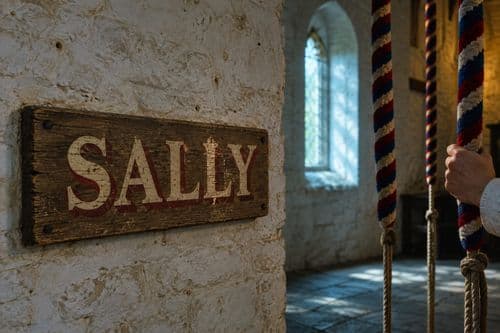
Sally

Every church bell rope has a fluffy woolen grip with a name most people have never heard. Here is the word, and how ringers use it....

Word of the Day

07 November 2026

Post

Ineluctable

Some outcomes can't be dodged, delayed, or talked out of existence. Ineluctable is the elegant word for what simply cannot be escaped, however hard you try....

Word of the Day

07 November 2026

Post

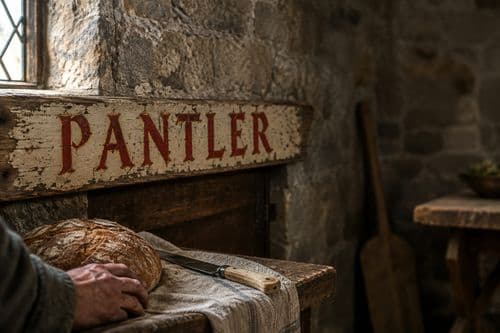
Pantler

The medieval household officer who guarded the bread and set the lord's table is gone from English, but his job title is hiding in your kitchen....

Word of the Day

06 November 2026

Post

Gerrymander

A mapmaker's trick named for a governor and a lizard, gerrymander describes drawing voting districts so cleverly that one side wins before ballots are cast....

Word of the Day

06 November 2026

Post

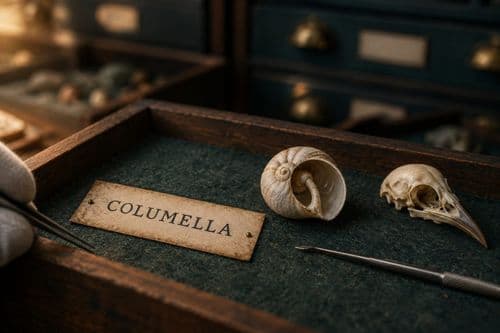
Columella

Run a finger under your nose and you'll find a strip of tissue with an exact name. Surgeons, snail collectors, and bird anatomists all use it....

Word of the Day

05 November 2026

Post

Supple

Supple describes anything that bends with ease and grace, from fresh leather to a dancer's spine. Its French roots once hinted at bowing low in submission....

Word of the Day

05 November 2026

Post

Tickle

A word you know, with a meaning you almost certainly don't. Here is the Newfoundland answer to today's guess, and the story of the water it names....

Word of the Day

04 November 2026

Post

Wizened

Raisins, old apples, and weathered faces all share one word. Wizened describes anything dried up and creased by time, with roots reaching back to Old English....

Word of the Day

04 November 2026

Post

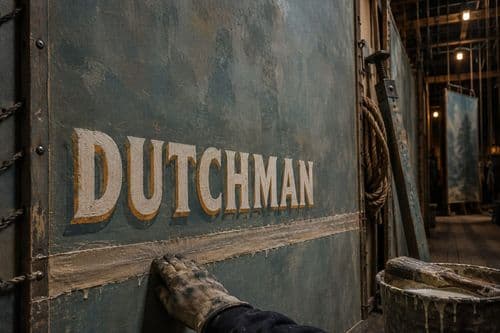
Dutchman

Every stage wall is built from separate panels, so how does the audience never see the cracks? Theater crews have one word for the fix....

Word of the Day

03 November 2026

Post

Hyperbole

Hyperbole is deliberate exaggeration, like saying you have a million errands. Its Greek root pictures a thrown javelin sailing far past its intended target....

Word of the Day

03 November 2026

Post

Phosphene

Rub your eyes in a dark room and colors bloom with no light in sight. Medicine and vision science have an exact word for it. Here is the story....

Word of the Day

02 November 2026

Post

Candor

Candor is honesty with the curtains pulled back: speaking plainly and openly, with nothing hidden and no polish added to soften the truth....
Terms and ConditionsDo Not Sell or Share My Personal InformationPrivacy PolicyPrivacy NoticeAccessibility NoticeUnsubscribe
Copyright © 2026 Word Of The Day