1 What It Means
A landing made in an aircraft whose engine has failed or been deliberately shut down, with the pilot gliding to the ground under control.
2 Caught in the Wild
The instructor pulled the throttle to idle and called out, deadstick landing, forcing the student to find the runway on glide alone.
Illustrative usage. · Undated
3 Where It Comes From
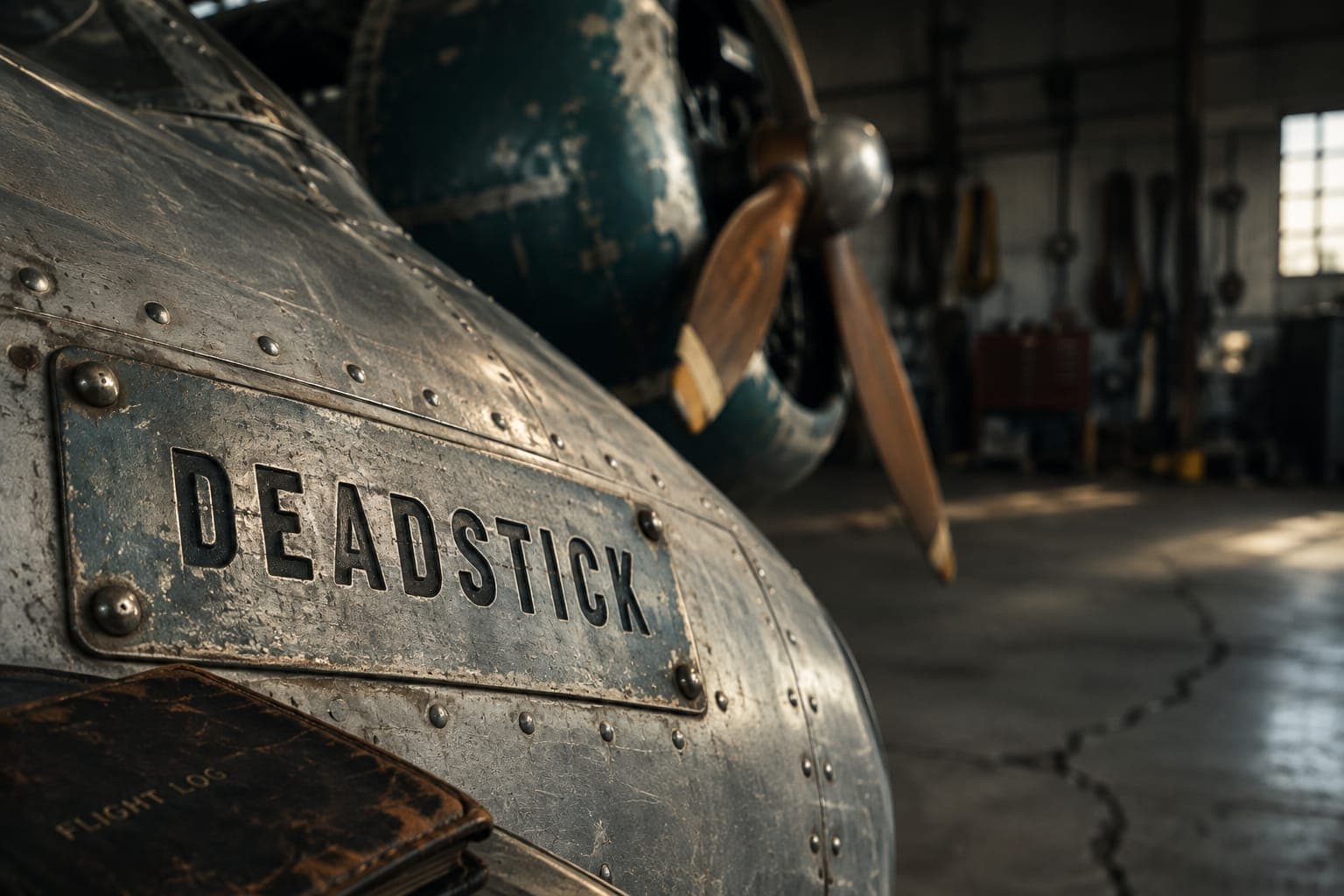
The word comes straight from the machine. Early propeller aircraft used a wooden control stick, and when the engine quit, the propeller stopped turning and the whole airframe went quiet and unpowered, as if the stick itself had gone dead in the pilot's hands. The term stuck through the transition from wood sticks to yokes and from propellers to jets, because the underlying event never changed: no thrust, no engine noise, just a glide. It never spread beyond aviation because nobody outside a cockpit needs a word for landing without power. Cars don't glide. Boats don't either. The situation is specific enough to one trade that the word had nowhere else to go.
4 The World Behind the Word
Every licensed pilot has practiced a deadstick landing, usually with an instructor cutting the throttle at altitude without warning. The pilot has to pick a landing spot within gliding range, judge the descent angle with no engine to adjust it, and manage airspeed using only pitch, since there is no power to climb back if the approach runs short. Commercial airliners train this too, most famously when US Airways Flight 1549 lost both engines to bird strikes in 2009 and glided into the Hudson River. The maneuver matters because engines do fail, rarely but not never, and a pilot who has never practiced flying without one is a pilot who improvises at the worst possible moment. The word names a skill, not just an event.
5 Use It Yourself
Reach for this when a project loses all its funding or support mid-flight and someone still has to land it safely. Telling a colleague you're deadsticking a presentation after the budget got pulled lands well with anyone who flies, and sounds sharper than saying you're improvising.
Try it out loud
Half our team quit before launch, so we basically deadsticked this product to the finish line.
🗝️The Deep Cut File
The 2009 Hudson River landing turned deadstick into a word some non-pilots learned for the first time, though most still didn't know its name even while watching it happen live on television. Pilots who heard reporters call it a water landing or crash landing noticed the gap immediately. The correct term was sitting right there in flight manuals the whole time, describing exactly what Captain Sullenberger did: find a flat surface and glide an unpowered aircraft onto it under full control. The event made international news. The word never did.