1 What It Means
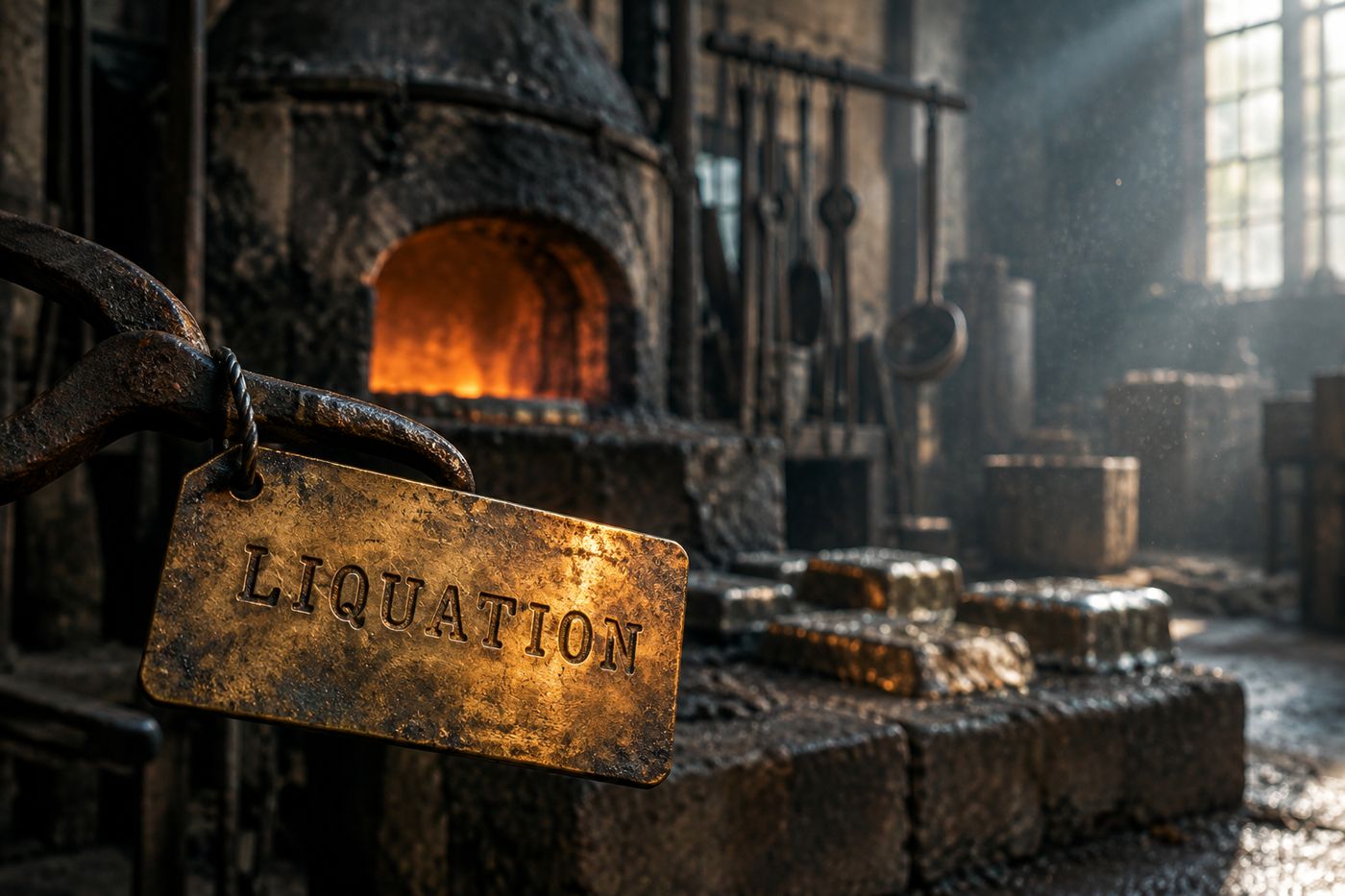
The process of separating metals with different melting points by heating an alloy until the lower-melting metal drains away first, leaving the rest behind.
2 Caught in the Wild
By liquation the silver was drawn from the copper, the baser metal remaining fixed while the finer flowed free.
Illustrative usage · Undated
3 Where It Comes From
Liquation comes from the Latin liquare, to melt or make liquid, the same root that gives English liquid and liquefy. Chemists and metal refiners borrowed the noun form directly for a specific industrial step, not a general state of being melted but a deliberate separation by melting point. The word stayed inside furnaces and assay offices because the process itself stayed there. Ordinary people never needed a word for draining one molten metal away from another, so the general vocabulary never adopted it, even as its cousins liquid and liquefy became everyday words. The technical sense simply had no civilian use waiting for it.
4 The World Behind the Word
Liquation solves a real problem: how do you pull one metal out of an alloy without chemistry, just heat. Metals melt at different temperatures, so a refiner heats an alloy to a point where the lower-melting metal turns liquid and drips away through channels or holes, while the higher-melting metal stays solid and gets left behind as a spongy mass. Renaissance German silver refiners used this to pull silver out of copper ore long before modern electrolytic refining existed, a process called Saigerprozess. It required careful temperature control in wood-fired hearths, since overshoot melted everything and undershoot melted nothing. The technique still shows up today in specialty alloy recovery and in some lead-bismuth separations, quieter now but running on the exact same principle.
5 Use It Yourself
You will not drop this at dinner unless you work in a foundry or teach materials science, but it is a sharp word for describing anything that separates by giving way at different pressures, not just heat. Picture a team where the weak links melt out first under deadline pressure, leaving the reliable people holding the project. Use it carefully around non-technical people; it reads as jargon, not insult, but it will get you a blank stare unless your audience has touched a furnace or a chemistry textbook.
Try it out loud
The recycling plant uses a version of liquation to pull lead out of old battery alloy before the rest gets recast.
🗝️The Deep Cut File
The Saigerprozess, the German liquation method for pulling silver from copper ore, financed a good chunk of the Fugger banking fortune in the 1500s, since it made previously unprofitable copper-silver ore worth mining at scale. The technique spread through central European mining towns and shaped mining law for centuries. It fell out of use once cheaper silver flooded in from the Americas and electrolytic refining arrived in the 1800s, making the old furnace method obsolete almost overnight. The word liquation survived in metallurgy glossaries only because assayers kept citing the historical process when teaching students how separation by melting point actually works.