1 What It Means
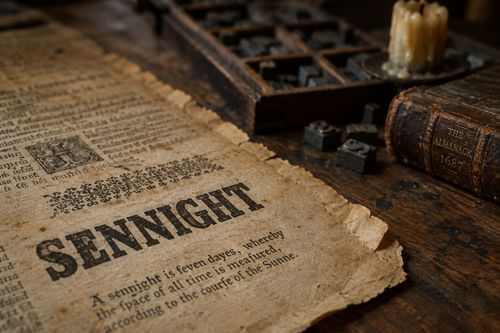
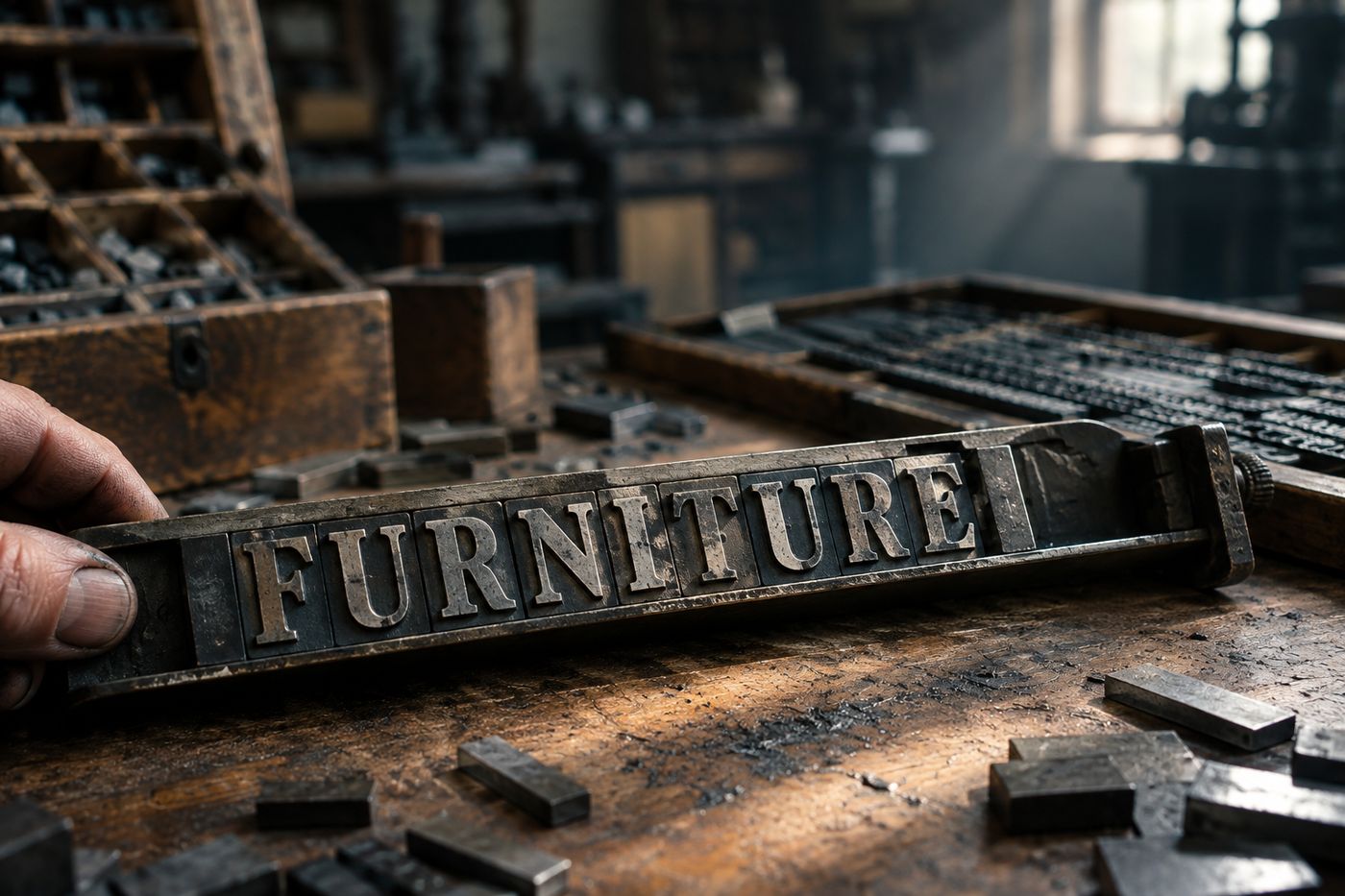
In letterpress printing, this word names the wood or metal blocks used to fill empty space around set type before locking it into the printing frame.
2 Caught in the Wild
The compositor packed furniture around the type until the forme sat solid enough to survive the press.
Illustrative usage · Undated
3 Where It Comes From
The word grew straight out of ordinary English. A room needs furniture to be usable; a chase full of loose type needed the same thing to hold together. English printers were calling these fill blocks 'furniture' by the late 1600s, and the sense stuck because it was so exact: not decoration, structural filler. It never spread past the print shop because the object it names disappeared from most people's lives along with hand-set type. Once hot metal and then digital typesetting took over, nobody outside a working pressroom had reason to pack a chase, so nobody had reason to learn the word.
4 The World Behind the Word
Before type could be printed, it had to be locked rigid inside a metal frame called a chase. Lines of type rarely filled the whole frame edge to edge, so compositors packed the gaps with furniture: strips and blocks of wood or metal cut to exact sizes, sitting between the type and a set of expandable wedges called quoins. Tighten the quoins and the whole assembly, type plus furniture, clamps into one solid, immovable block. Skip the furniture, or size it wrong, and the type shifts under the pressure of the press and either jams the machine or prints crooked, smeared lines. Compositors kept graduated sets of furniture on hand the way a carpenter keeps shims, because every page demanded a slightly different fit.
5 Use It Yourself
Reach for this one when a coworker jury-rigs a fix that holds a project together without actually being part of it. A wedge under a wobbly table leg, a stack of binders propping a laptop stand, the intern who quietly makes three departments function. Nobody outside a print shop will get the printing reference, but the word still sounds sturdy and specific enough to land, even unexplained.
Try it out loud
Half our budget process is just furniture holding the real numbers in place.
🗝️The Deep Cut File
Quoins, the wedge-shaped locking pieces that furniture worked alongside, gave English the phrase 'quoin of the building' for a cornerstone, which later softened into 'coign of vantage,' a phrase Shakespeare used in Macbeth for a good viewing spot. So a phrase people still quote in essays and eulogies traces back to the same locking hardware that held furniture and type together in a printer's chase, two words from the same shop that ended up in completely different rooms of the language.