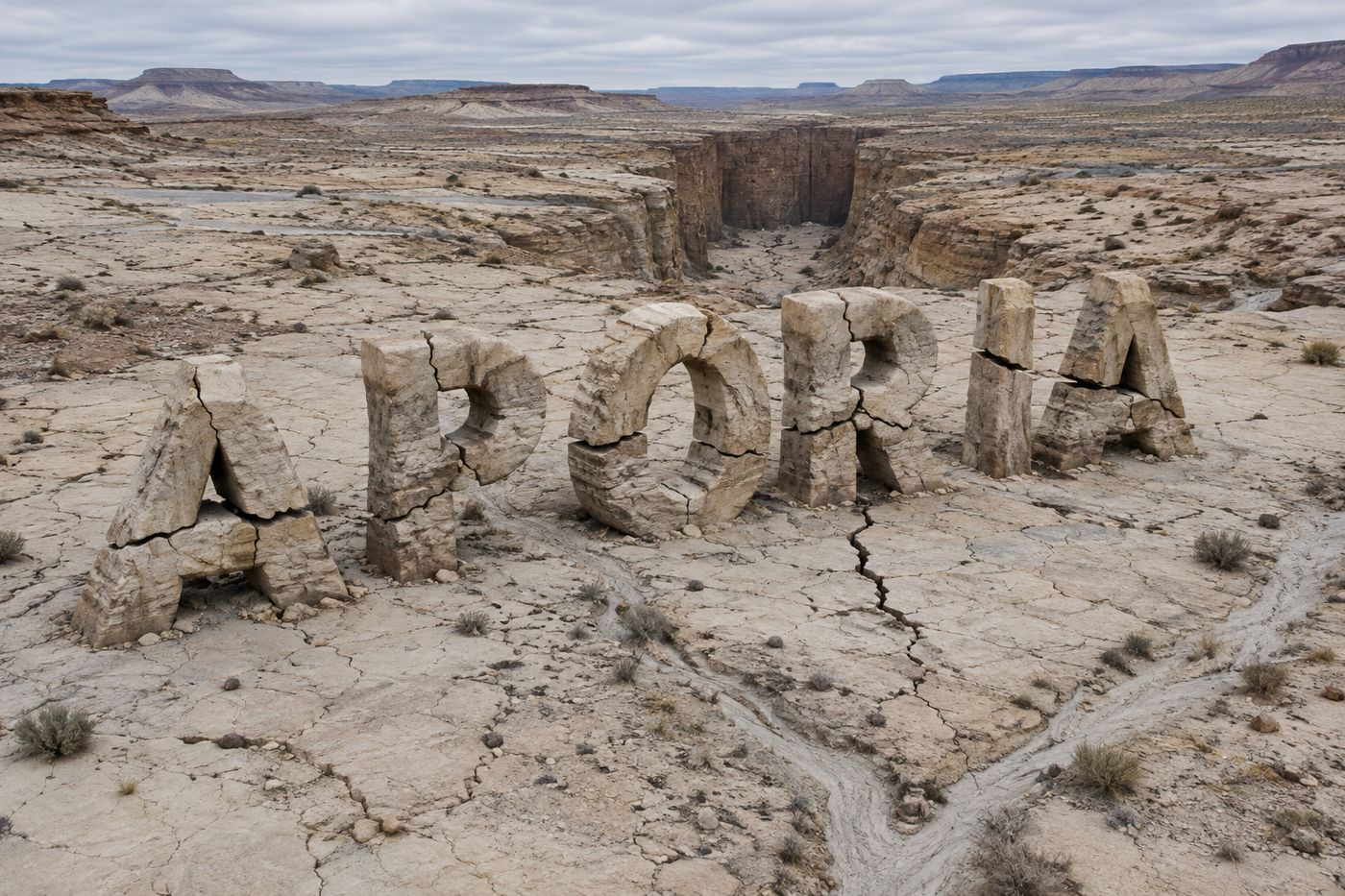
1 Definition
A state of puzzlement or impasse, especially in philosophy, where reasoning leads to a genuine contradiction or difficulty with no clear resolution.
2 In Use
The seminar spent two hours circling an aporia neither the professor nor the textbook could resolve.
3 Word Origin
aporos Gk. · without passage → aporia Gk. · a puzzle, impasse → aporia 16th c. English
Aporia descends from the Greek aporos, meaning without passage, formed from the negative prefix a joined to poros, a way through or ford. Greek philosophers, especially the Socratic dialogues, used aporia to name the moment a conversation hits a genuine wall, where every path toward an answer seems blocked. English borrowed the term directly in the sixteenth century, first as a rhetorical device for feigning doubt before an audience, and later as a formal term in philosophy for an unresolved contradiction within an argument.
💡Fun Fact
Aporia became a central idea for twentieth century deconstructionist philosophers, especially Jacques Derrida, who treated every text as containing hidden apories, points where its own logic quietly undermines itself. The word also survives as a classical rhetorical figure, where a speaker dramatically pretends not to know what to say next, a trick used to draw listeners deeper into an argument. In contemporary science writing, researchers sometimes borrow the term loosely to describe a genuine paradox at the edge of current knowledge, a question that current theory simply cannot answer yet. It even lends its name to a butterfly genus, Aporia, named for the pale, almost ghostly wings that seem to vanish against bright light.