1 What It Means
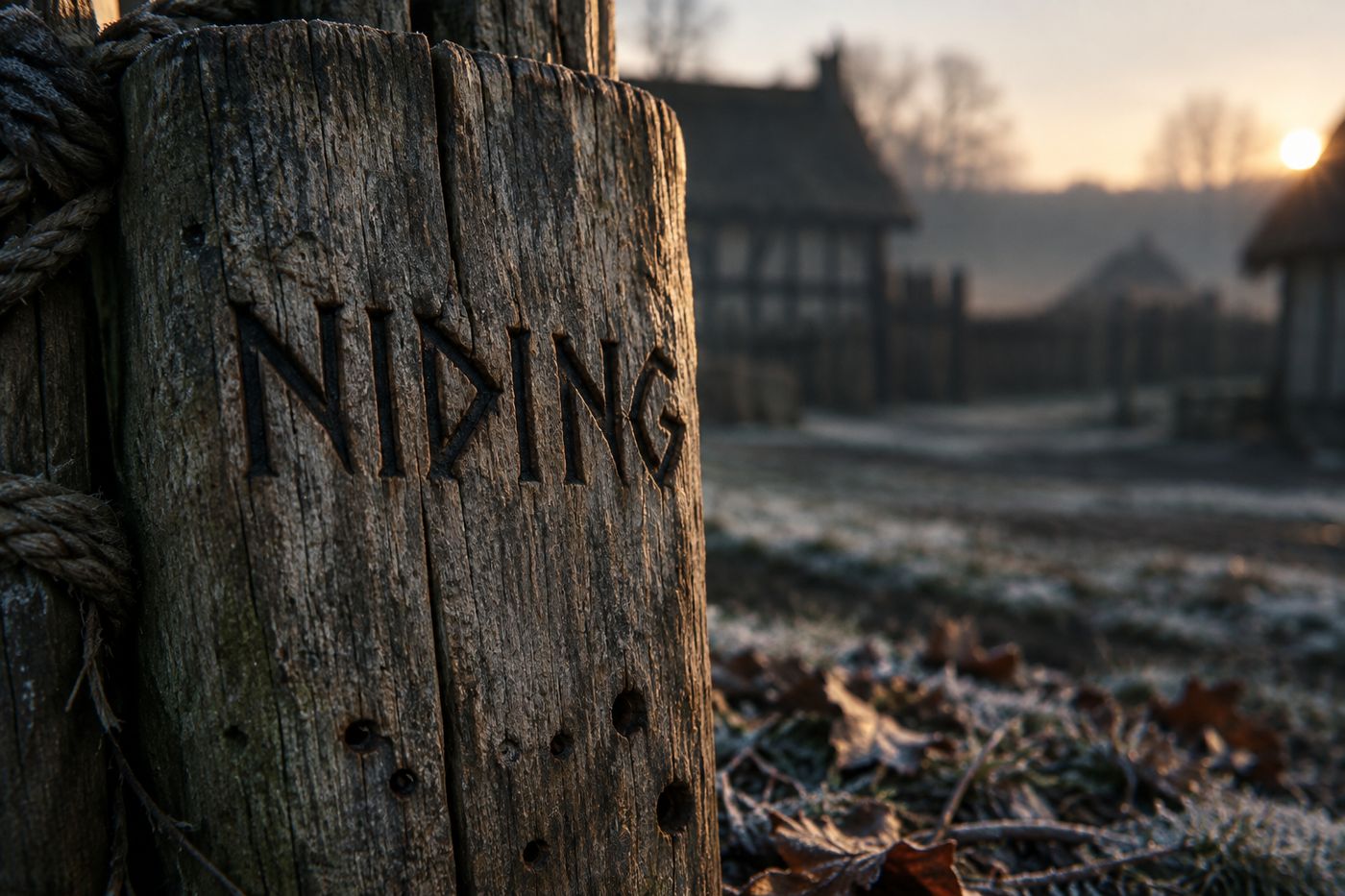
An obsolete English word for a person publicly declared a coward or outlaw, stripped of honor and legal standing by formal decree.
2 Caught in the Wild
The Anglo-Saxon Chronicle records that a man who deserted his lord in battle could be proclaimed niding, a status that followed him for life.
Anglo-Saxon Chronicle (as cited in later historical scholarship) · c. 1086
3 Where It Comes From
Niding comes from Old Norse nithing, carried into Old English through Danelaw contact and Anglo-Saxon legal custom. It named a formal, almost ceremonial disgrace: a warrior who abandoned his lord, a man who broke an oath, could be declared niding by public proclamation, and the label stripped him of legal protection. English law eventually replaced this branding system with statute and court process, and the word had no job left to do. It survived only in chronicles and later in antiquarian dictionaries, a fossil of a legal culture that punished with reputation before it punished with prison.
4 The World Behind the Word
Early medieval English and Norse law ran heavily on public shame rather than institutions. There were no police forces, no standing courts in the modern sense, and enforcement depended on a community's willingness to treat someone as an outsider. Declaring a man niding did real legal work: it could void his right to compensation if wronged, bar him from oath-taking, and mark his descendants. The famous case is the 1086 entry describing English thegns who fled a battle and were branded niding by royal order, a punishment understood as worse than exile because it followed a man's name. As centralized courts and written statute law developed through the 1100s and 1200s, this kind of reputational sentencing lost its legal teeth and its vocabulary went with it.
5 Use It Yourself
You will not drop this into casual conversation without a footnote, but it is a useful private word for the specific shame of being publicly called out as a quitter, especially in group settings where reputation is the only real penalty. Save it for group chats about someone who bailed on a group trip deposit or ghosted a co-founder.
Try it out loud
He didn't just miss the deadline, the whole team basically nidinged him in the group chat afterward.
🗝️The Deep Cut File
The word has a strange afterlife in fantasy fiction. Writers researching Norse and Anglo-Saxon law for medieval-flavored novels occasionally resurrect nithing as a curse or insult, usually without explaining that it once carried actual legal consequences, not just an insult's sting. The modern English word niggard, unrelated in origin though sometimes confused with it, has caused real controversy for sounding similar, which has led some historical dictionaries to flag niding with a usage note just to keep the two apart in a reader's mind.