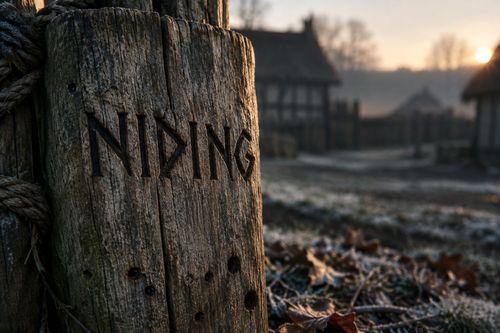

1 Definition
The state of being enslaved or held in servitude, or more broadly, a condition of being completely controlled by something or someone.
2 In Use
Decades of mounting debt had settled the family into a quiet, invisible thralldom to the bank.
3 Word Origin
þræll O.N. · a slave → thrall M.E. · bondsman → thralldom Middle English
Thralldom descends from the Old Norse noun þræll, meaning a slave or bondsman, a term that traveled into English through centuries of Norse and Anglo Saxon contact. Once settled in Middle English as thrall, it described a person bound in servitude to a lord or master. The suffix dom, the same one found in kingdom and freedom, was added to turn the person into a condition, giving English a single word for the entire state of being owned by another.
💡Fun Fact
Though the word carries the weight of medieval bondage, writers have long stretched thralldom into metaphor, describing anyone gripped by an obsession, a habit, or a powerful idea as being in its thralldom. Percy Bysshe Shelley and other Romantic poets leaned on the word to describe emotional and political captivity alike. Today it occasionally resurfaces in commentary about technology, with people described as living in a kind of thralldom to their phones or feeds, proof that an old Norse word for chains still has something to say about modern leashes.